WP Hook Expose WP Registry grade B. Medium-severity findings · 1 findingWP RegistryMedium-severity findings · 1 findingOpen the reportB
🔌 A lightweight plugin to create webhooks in WordPress.
Install
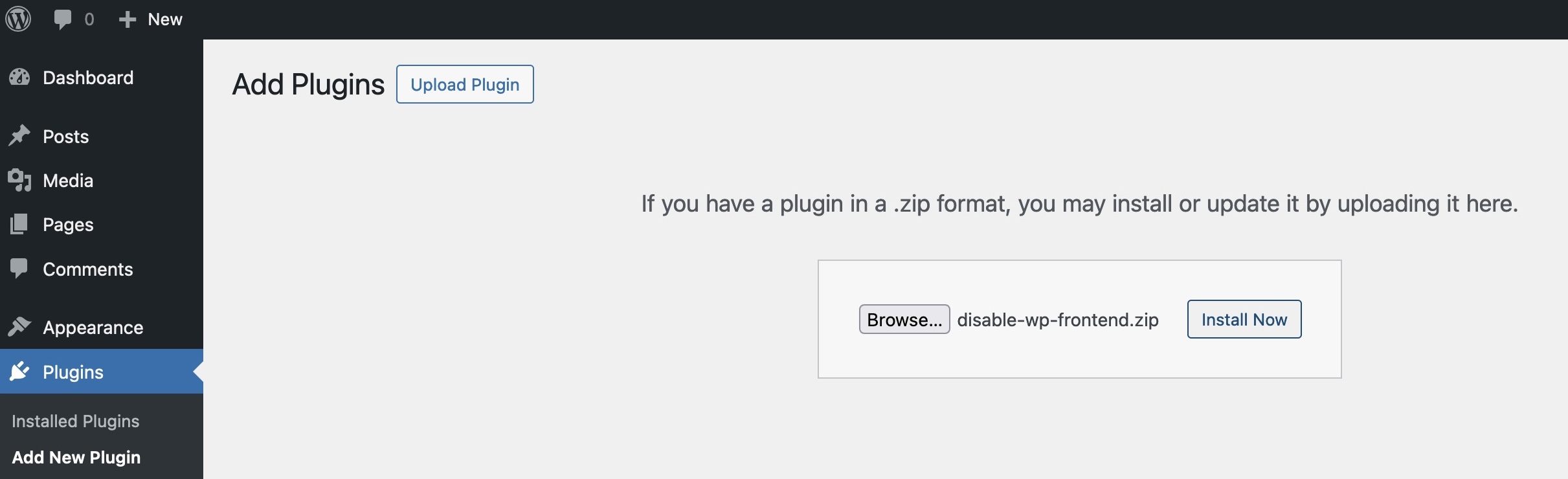
Upload it under Plugins → Add New Plugin → Upload Plugin, then activate.
Install straight from GitHub with WP-CLI:
wp plugin install https://github.com/fabiancdng/wp-hook-expose/releases/download/v1.1.1/wp-hook-expose.zipWP Hook Expose
A simple and fast way to turn WordPress hooks into custom webhooks.
Table of Contents
Installation
- Download the
wp-hook-expose.zipfile from the latest release. - In your WordPress admin panel, navigate to
Plugins -> Add New. - Click
Upload Pluginat the top of the page. - Upload the
wp-hook-expose.zipfile. - Activate the plugin.
Webhooks
Managing webhooks
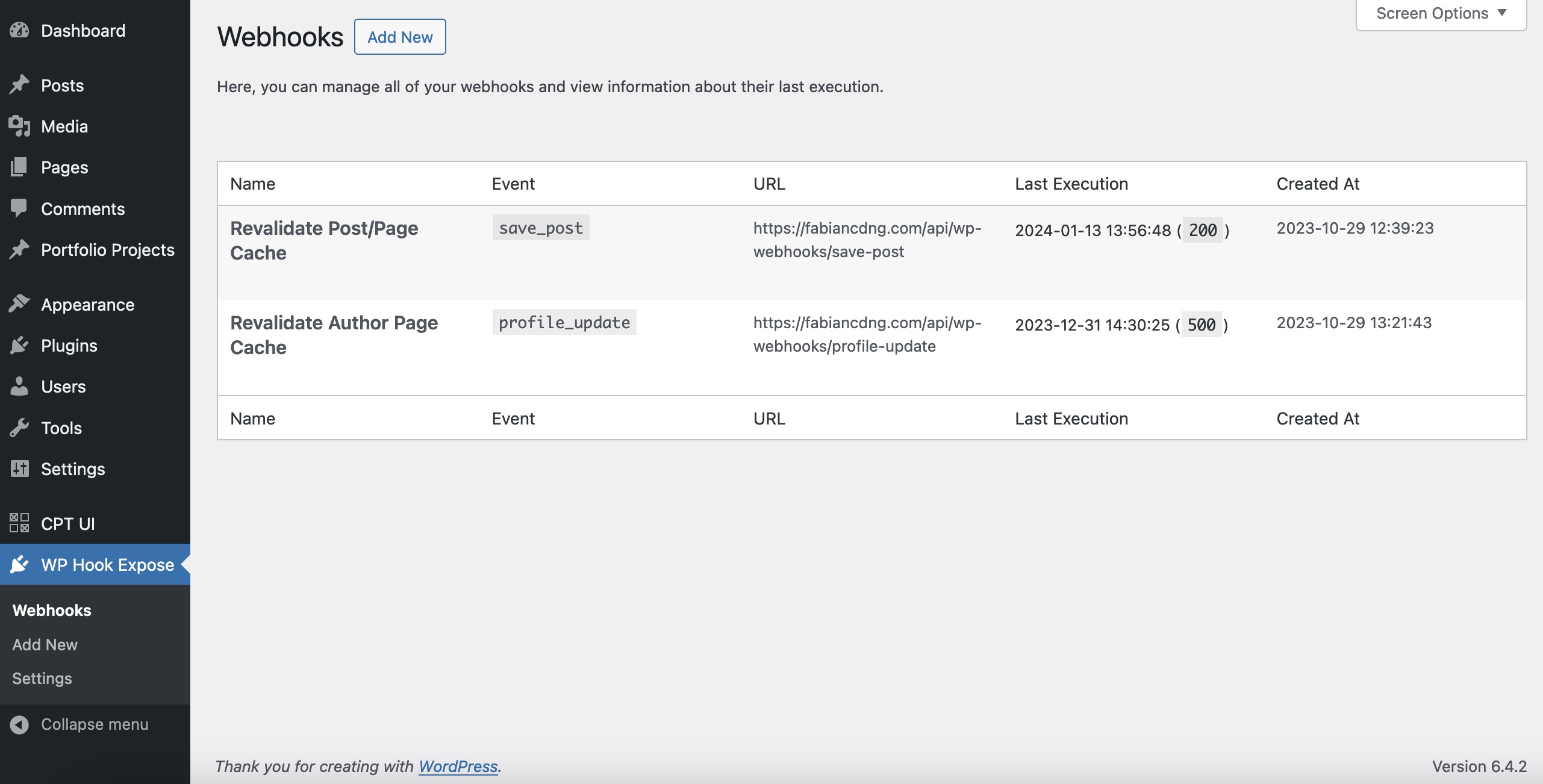
The plugin provides a UI to list, create, edit and delete webhooks all in the WordPress admin panel.
How webhooks work
This plugin takes a different approach to webhooks than most other plugins.
Webhooks are not bound to pre-defined events or have pre-defined HTTP bodies.
All webhooks are subscribed to WordPress actions and turn them into a webhook.
The arguments the WordPress action is called with are used as the HTTP body of the webhook.
This way you can create custom events for your webhooks super easily... just create a new WordPress action and you're good to go!
Creating a new webhook
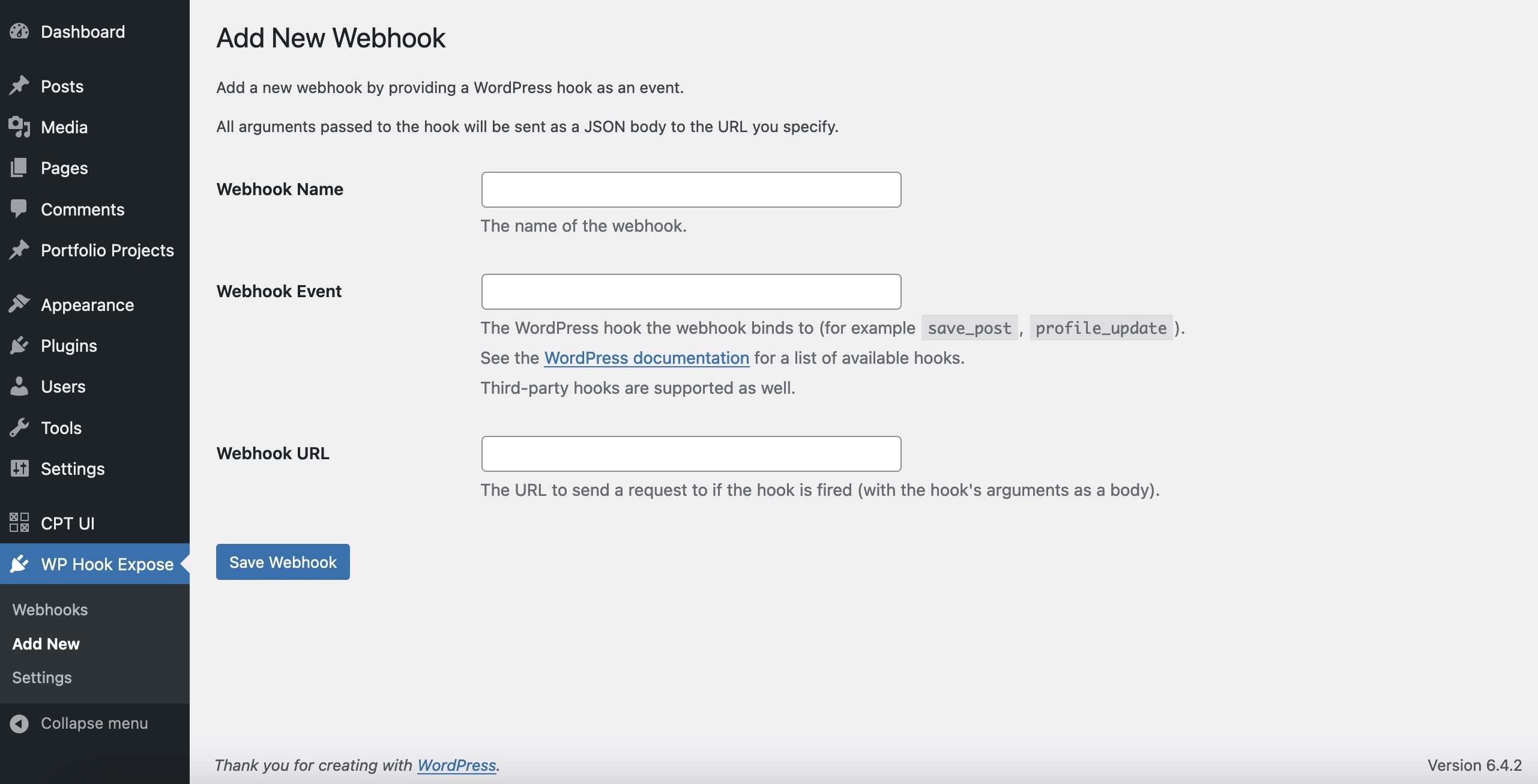
You can choose the URL to send the webhook to and the WordPress action to use freely on the "Add New" screen.
Potential pitfalls
Due to the nature of this plugin, there are some things to keep in mind:
- Webhooks send all arguments of the WordPress action as the HTTP body. This means that if you use a WordPress action that sends sensitive data as an argument, this data will be sent to the webhook URL. Therefore, only point webhook requests at trusted URLs!
- If a hook is called several times during the same HTTP request to your WordPress instance, a webhook is only sent off once. In a future version, this behavior might be configurable.
Upgrading to a new version
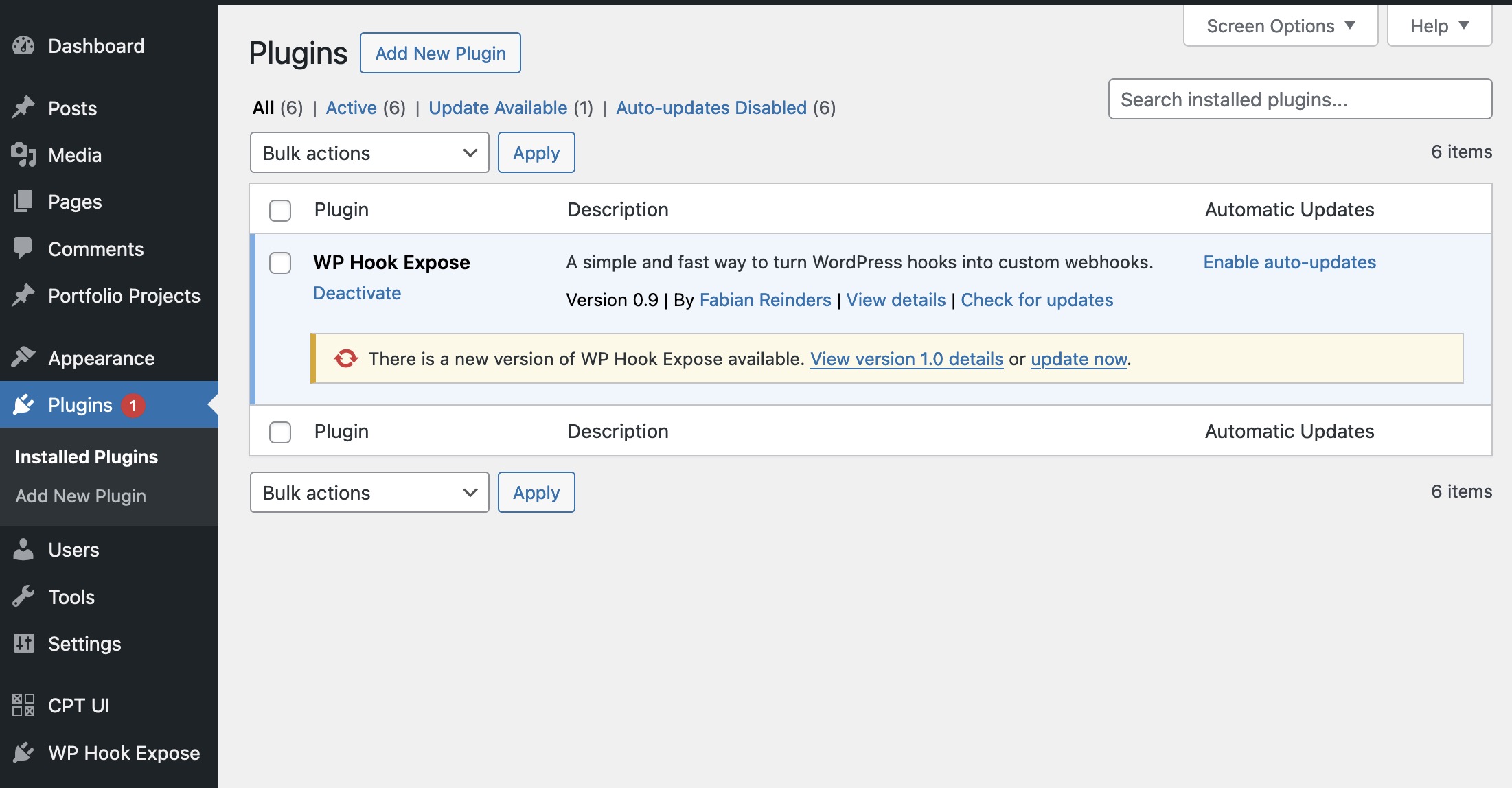
Upgrading to a new version can be done entirely from within the WordPress admin panel. No need to upload a new zip file!
The plugin will automatically check for updates twice a day.
If you want to check for updates manually, you can click
the Check for updates button on the plugin's settings page.
Credits
"WP Hook Expose" uses the following third-party open-source libraries and packages:
plugin-update-checkerby Yahnis Elsts
Releases
4 releases. Each count is every asset in that release; expand a row for the breakdown.
Active-site estimate ≈10 comes from the median of recent superseded releases. Method.